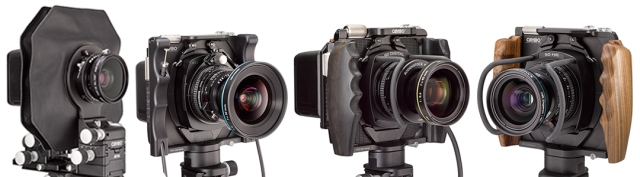
Cambo Actus REPRO

Cambo ACTUS REPRO

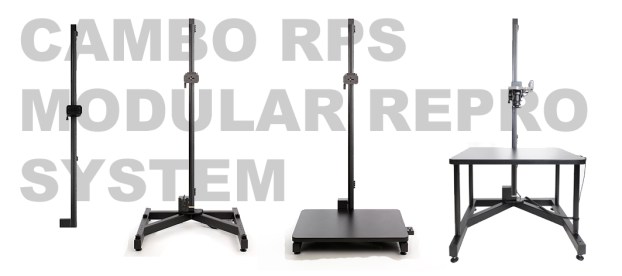
When capturing objects and fine art it is important to use a heavy duty copystand to prevent vibration. The Cambo RPS system is designed to support camera systems and components up to 10Kg. Its modular to suit your requirements; whether you wish to mount the RPS to the wall, have a free standing system, with LED or an under lighting system – one of these combinations will suit your needs.
RPSmodular

Cambo RPS

Since launching the RPS at Photokina 2010, the system has been supplied Worldwide to photographers, museums libraries and archives.
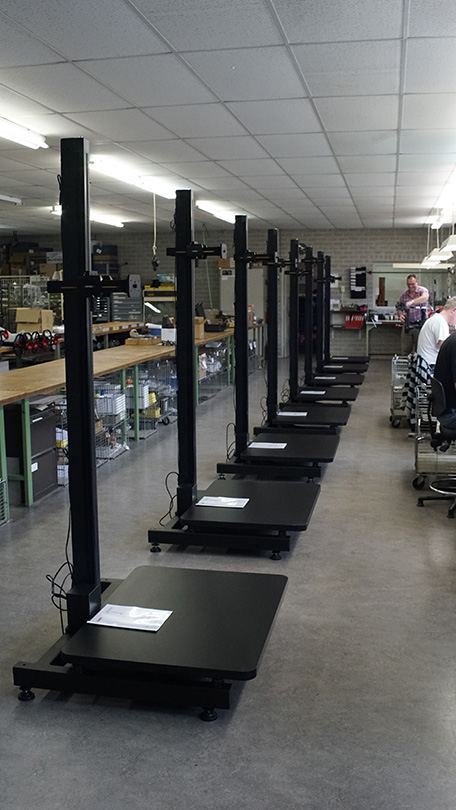
RPStest

Cambo RPS testing

Our specialist dealers supply Cambo technical cameras together with lenses specifically designed for close up and macro work, as well as camera shift for stitching images to produce larger image files. These cameras are supplied with digital backs from Hasselblad, Mamiya Leaf or Phase One. To enable the camera and lens to synchronise there is a digital shutter controller available and this combination will produce the best results.
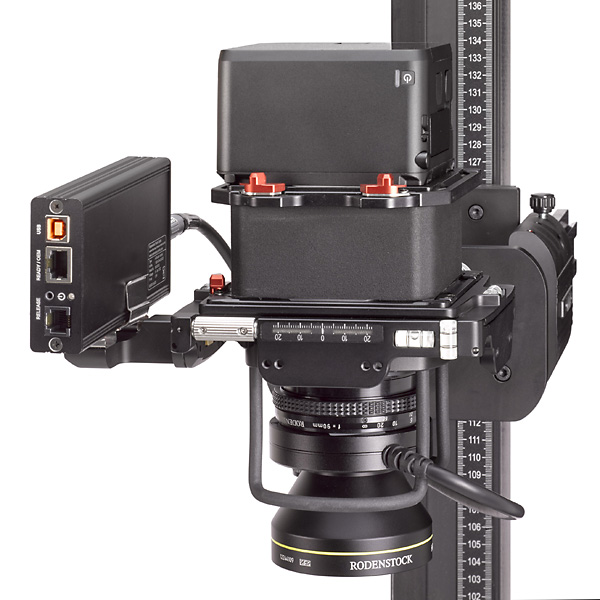
Cambo WRC400 Rodenstock E Shutter

Cambo WRC400 Rodenstock E Shutter

In 2014 the Cambo launched the Actus. A high quality compact camera system that took the market by storm as the platform was small, it was lightweight and offered most of the movement a photographer would need when shooting landscape and architecture.
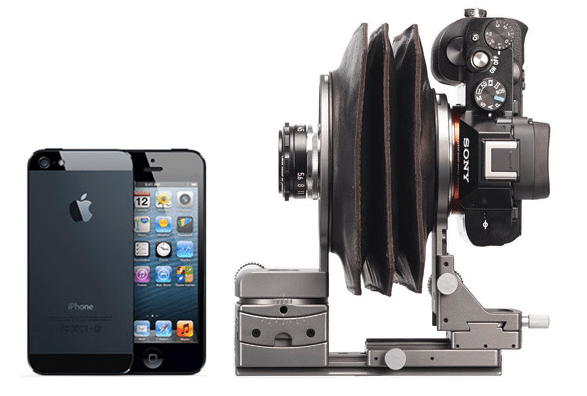
CamboActusA7iPhone

Cambo Actus and Sony A7

Of course it wasn’t long until photographers wanted to do more with the Actus. Extend the bellows to shoot macro, reduce the bellows to shoot wider shots and also swap the DSLR/Mirror camera for a digital back. Cambo were already developing the accessories for these demands.

As digital sensors became larger and the pixel/resolution increased it became obvious there would be many benefits when using an Actus with a DSLR/Mirrorless camera for archiving cultural heritage. Okay, you could buy a macro lens and mount it to a DSLR but what you can also do with the Actus is shift the camera horizontal and vertical to capture a stitched image, hence producing a larger high resolution file. As the resolution of DSLR/Mirrorless systems increased, Cambo paid particular attention to the demands of the archivists and developed a solution that will fit to their budget without sacrificing the  build quality.

Cambo Actus REPRO

Cambo Actus REPRO

Controlling the copystand is also important as you don’t want the camera system to vibrate causing the system to misalign. The RPS comes complete with a hand control that has speed control to raise and lower the camera into position. By using the Camera Live View you can move the camera into position and frame accurately by varying the motor speed.

Camera manufacturers have also improved the live view ten fold, so can easily frame the shot with the motorised control of the RPS, see the exact composition and check focus through your monitor. 

The front of the Actus is permanently fixed so that there is the best parallel plane between the lens and sensor. The rear standard has full horizontal/vertical shift for stitching large files according to the lens/image circle. Cambo recommend using digital lenses with the Copal 0 or 1 lens plate. You can select from a wide range of lens plates; Copal 0, Copal 1, M39, Leica-R, Nikon F, Canon EOS, Hasselblad V, Mamiya RZ/RB, Mamiya 645ProTL and Pentax 645.

For further information about the Cambo Actus REPRO system contact your dealer, or find your nearest supplier via the Cambo website; cambo.com email; sales@cambo.com
Posted in ACTUS, Archival, macro, Reprographic | Tagged , , , , , , , , , , , , , , , , , , | Leave a comment

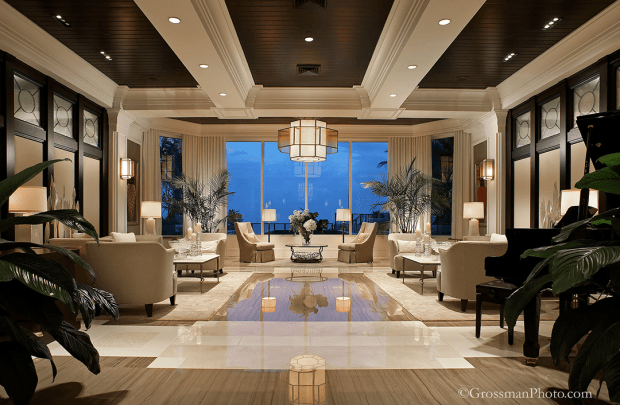
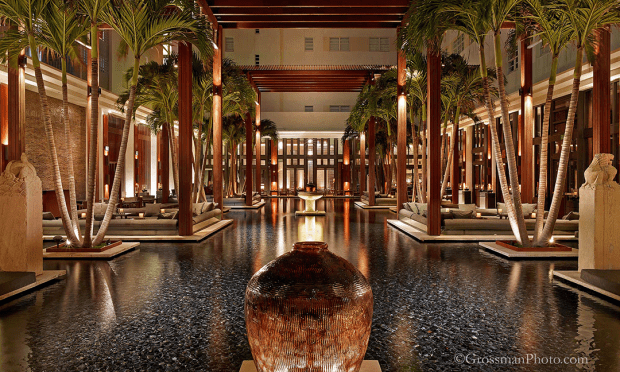
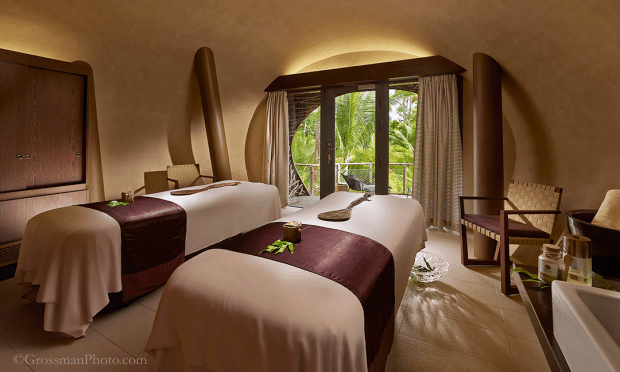
Luxury Real Estate Photography by Barry Grossman

Luxury Real Estate Photography by Barry Grossman

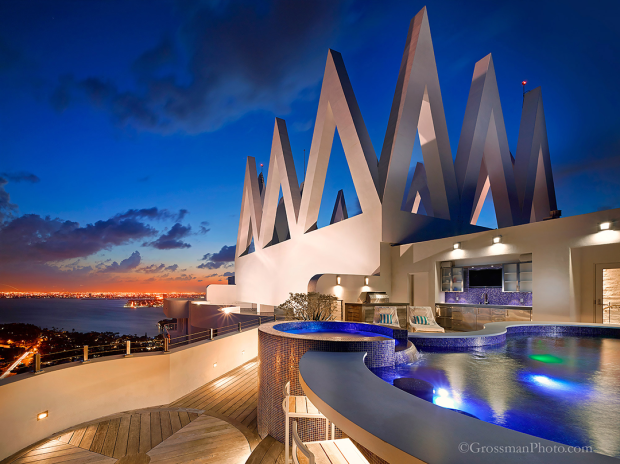
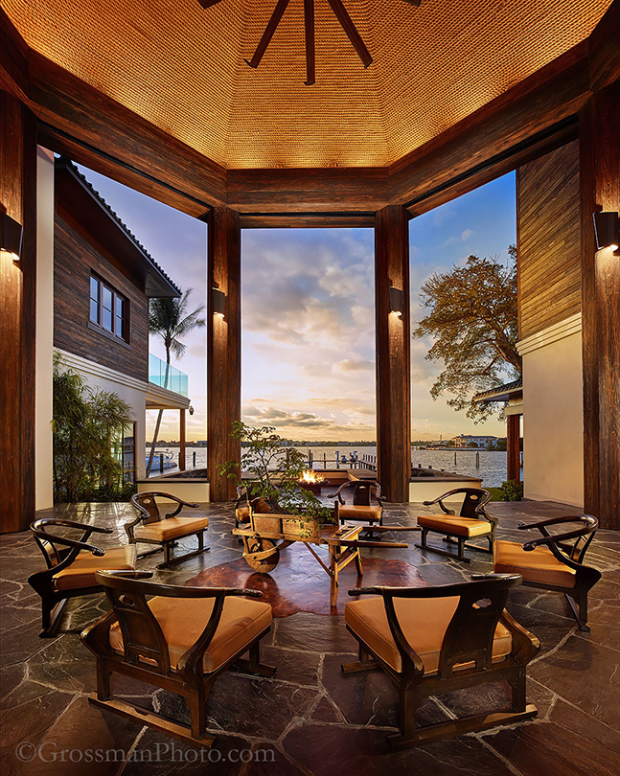
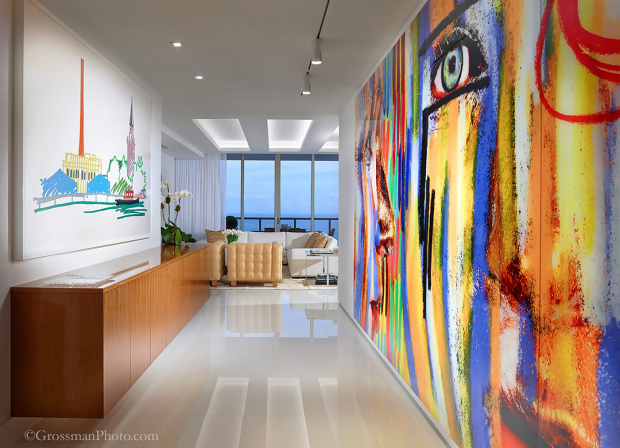
Barry is a professional architectural and interior design photographer based in South Florida. As a professional photographer with over 23 years experience he works closely with architects, interior designers, public relations firms and advertising agencies. Barry’s photography assignments have taken his creative team from Florida to New York, Las Vegas to the Bahamas and Atlanta to Cancun. Barry’s images are consistently published. His clients are seen internationally in books, trade publications and magazines including Architectural Digest, Florida Architecture, Florida Design, Luxe, and Miami Design among many others.

©GrossmanPhoto.com

©GrossmanPhoto.com

How did you become a photographer? 

I began my career in commercial photography shortly after graduating film school where I minored in photography. I have always wanted to tell stories with my images.  As a filmmaker, I was drawn to interior space and often used architectural elements to help convey my narratives and help define my characters. Many personal projects centralised the story of the environments and the people who lived within them. Atmosphere was integral to what inspired me artistically as a filmmaker, cinematographer and stills photographer.

©GrossmanPhoto.com

©GrossmanPhoto.com

What persuaded you to shoot interiors?

Working with the interior design community just seemed to make sense and I love the artistic temperament of my clients and the specialty allows me to express myself, while telling the story of my designer’s work.

©GrossmanPhoto.com

©GrossmanPhoto.com

What type of customers do you shoot for?

For over 25 years I have had my primary clientele be interior designers, primarily residential, but nearly as often, designers and architects of commercial spaces. From my experience, the collaboration of photographer and interior designer is a very artistically motivating one.

©GrossmanPhoto.com

©GrossmanPhoto.com

Why did you choose to invest in the Cambo System?

I have owned a Phase One camera since 2003 and I have upgraded their digital backs every 3 year or so. Late-2015, I started to research their IQ260 and really wanted to bring my work to the next level. It made perfect sense for me to begin utilising the best technical camera and lens system to go along with my new Phase One digital back. The Cambo WRS 5000 does everything I need as an architectural shooter. I am able to refine my work and achieve the absolute best in image quality with this extremely elegant system. I love the feel of the camera… I love the look of the camera. Most important, I truly enjoy setting it up each day and working with it because I have what I consider to be the best combination of quality, ease-of-use and camera design in the industry.

©GrossmanPhoto.com

©GrossmanPhoto.com

Many photographers ask for lens recommendations. Which lenses do you mainly use and do you have any of the Cambo WTS versions – with the Tilt/Swing panel?

I employ the following lenses, which are all Rodenstock: 23mm HR Digaron-S, 32mm HR Digaron-W, WTS40mm HR Digaron-W and WTS70mm HR Digaron-W.

©GrossmanPhoto.com

©GrossmanPhoto.com

Each lens functions beautifully with the Cambo system. My primary lenses for my interiors work are the 23, 32 and 40mm. The WTS lenses with Tilt/Swing capability is fantastic and brings me very close to the functionality of my old view camera with the ability to control depth of field and plane of focus.

©GrossmanPhoto.com

©GrossmanPhoto.com

Do you have any other cameras, lenses, or any useful gadgets in you kitbag we should know about?

I am so impressed with my tripods by Really Right Stuff and I use two of them.  My primary camera support is the TVC-34L and for small travel shoots, I love their tiny TVC-24.  I also utilise the Arca Swiss Cube head for my camera support and it’s an essential tool to go along with the precision of the Cambo WRS 5000.  I am also very fortunate to own Profoto strobes and employ B1, and D1 units for my work.

©GrossmanPhoto.com

©GrossmanPhoto.com

Finally, what is you capture process and how do you manage your Workflow?

These days, our workflow has become streamlined. Most of our work involves shooting multiple exposures and what I call, “lighting layers.” These different photos are accomplished with the precision that the Cambo system offers. It is extremely important that the digital files are exactly registered as one pixel off can become problematic to my post-production process. A typical shot will involve 15-20 test images as we compose the shot, adjust the subject matter to suit the designer’s and photographer’s artistic vision.

©GrossmanPhoto.com

©GrossmanPhoto.com

Once the frame is set, I usually shoot an ambient frame, sometimes several of differing exposure values. This is followed by anywhere from 2, 3, 5 or sometimes 10 or more “lighting layers” where my assistant or I will move throughout the frame adding fill, or adding accent lighting to create depth, drama or allow for technical value i.e. correct colour balance or tone rendition. Once all that is complete, we move on to the next shot!

©GrossmanPhoto.com

©GrossmanPhoto.com

Usually, the following day, we are in our studio processing the RAW files in Capture One Pro software. Once the files are output, we will open them into Photoshop where we work our magic. This technique offers great functionality and efficiency, but also allows for creative use of lighting while on-set. All this would be very hard to accomplish with equipment less advanced than the Cambo and Phase One, in harmony.

©GrossmanPhoto.com

©GrossmanPhoto.com

As it pertains to file delivery, I will usually finalise my images as 16bit RGB files and archive those.  Most often, these days, I will also save a max-quality Jpeg file and upload that to a private server for my clients to review and eventually download.

©GrossmanPhoto.com

©GrossmanPhoto.com

Thanks Barry, we appreciate your feedback and sending us sample images. You can see more at www.grossmanphoto.com and his most recent work at www.luxuryrealestatephotography.com

Cambo Cameras ddi actionmc

For further information about the Cambo Wide RS and Actus system contact your dealer, or find your nearest supplier via the Cambo website; cambo.com email; sales@cambo.com
Posted in Architecture, Interiors, Landscape | Tagged , , , , , , , , , , , , , | Leave a comment

CAMBO AT PHOTOPLUS, NEW YORK

CAMBO AT PHOTOPLUS NEW YORK

Cambo welcomes you to the Cambo booth nr. 358 on the PhotoPlus in New York City.

PhotoPlus 2016 will be held in the Javits Center in Manhattan, the Expo is running from 20nd to 22nd of October 2016.

2016_photoplus

Cambo booth nr. 358

Cambo will shown the range of Tech cameras, including the new Wide RS 1600 and the new ACTUS series, along with other accessories. Also the new mid-range MBX Studio Stand will be shown.

You can find more information here Photoplus Expo

Posted in Exhibitions & Open Days | Tagged , , , | Leave a comment

New Cambo WRS Canon Lens Mount

New Cambo WRS Canon Lens Mount

Cambo announced at Photokina 2016; the new Wide RS Canon lens mount that will give photographers more lens options when shooting landscape and architecture.

Cambo Wide RS Canon Lens Mount

Cambo Wide RS Canon Lens Mount

Mr Koop van Benthem, MD, said “It’s an exciting time for Cambo to bring more functionality to the Wide RS range of cameras. We built a similar lens mount for the Actus camera and photographers using the WRS now have the same flexibility.”

Cambo Canon Lens Mount fitted to the Wide RS

Cambo Canon Lens Mount fitted to the Wide RS

Further information will follow.

Cambo Wide RS with Canon Lens

Cambo Wide RS with Canon Lens

Cambo website; cambo.com email; sales@cambo.com


Posted in General, Wide RS | Tagged , , , , | Leave a comment

Cambo at Photokina 2016

Cambo at Photokina 2016

The Photokina show is very busy and has already proven a success. Many visitors are visiting Cambo to test out the Actus camera system, the new Wide RS1600, the MBX studio stand and placing orders.

Cambo visitors

Cambo Hall 4.1 Stand H17

We are here until Sunday 25th September, Hall 4.1 Stand H17.

Posted in ACTUS | Tagged , | Leave a comment

Canon Auto Lens mount – see it at Photokina

Canon Auto Lens mount – see it at Photokina

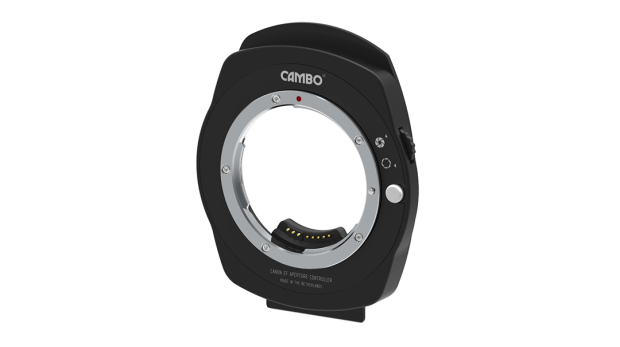
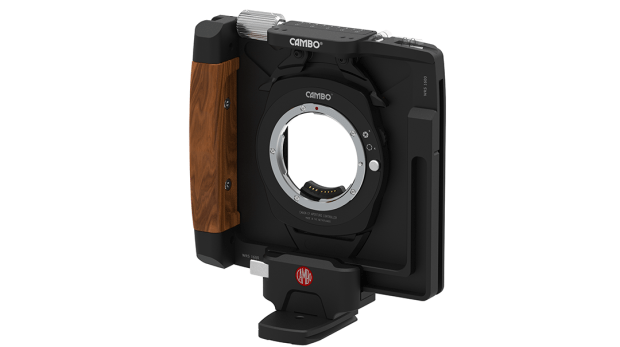
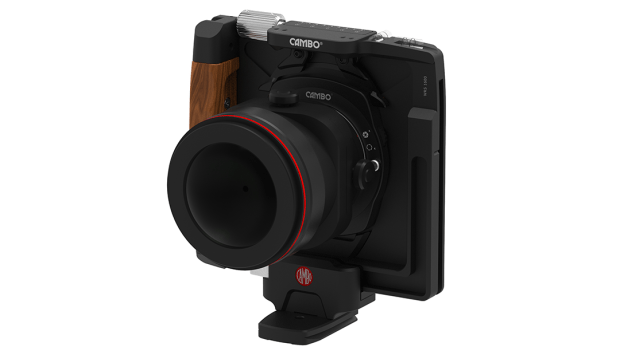
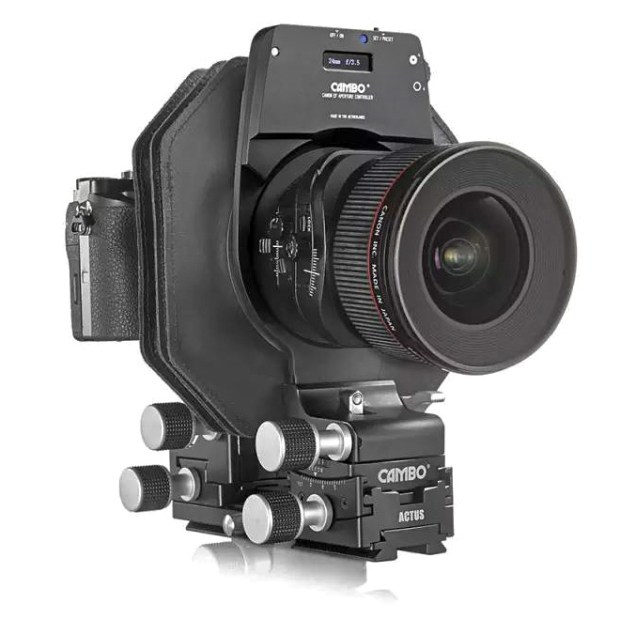
Cambo are showing the Canon Auto Lens Mount ACB-CA for Canon EF lenses fitted to the ACTUS mini view camera. The adapter has built-in electronic controls for setting and operating the aperture of Canon EF lenses.

Cambo Actus plate for Canon EF lens

© actionmc.co.uk

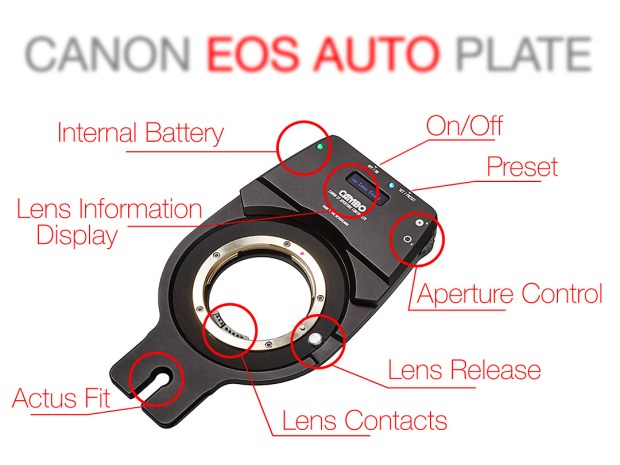
Normally when a Canon auto iris lens is removed from the camera body the lens aperture is wide open. The ACB-CA communicates with the lens and enables the user to adjust the aperture, giving you full control.

Cambo acb-ca_03

Cambo ACB-CA and 24mm TS Lens

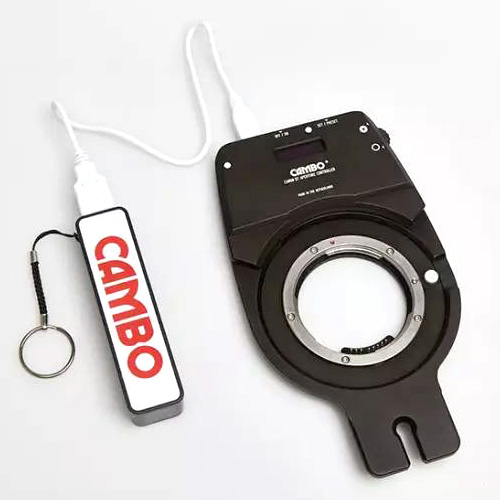
This adapter has an internal battery for continuous use and features an OLED display which shows the preset or set aperture together with the focal length of the lens. The communication is accurate, such that the display will also show the focal length of zoom lenses.

Cambo acb-ca_04

Cambo ACB-CA Lens Mount

The adapter accepts lenses fitted with Canon EOS bayonet, in combination with the ACTUS view camera. The ACB-CA adapter is finished in black to match the ACTUS-B camera version.

This ACB-CA lens adapter is designed to work with mirrorless* camera bodies, such as the Sony A7 series, Fujifilm X series, Canon M series, selected Olympus and Panasonic models. When mounted on the Actus the adapter will tilt and swing within the lens image circle that is being used. The rear rise/fall and left/right shift will operate as normal, again within the lens’s image circle.

*Mirrorless camera bodies have the imaging sensor further forward enabling the lens to focus at infinity or closer.

Check via the Cambo Configurator the compatibility between cameras, lenses and adapter when using the Cambo Actus.

Cambo ACB-CA Kit

Cambo ACB-CA Kit

The ACB-CA adapter is available now from stock €1,040.00 excluding VAT and shipment.  Cambo package this as a kit which includes a Powerbank and cable.

Contact your dealer, or find your nearest supplier via the Cambo website; cambo.com email; sales@cambo.com

Posted in ACTUS, General | Tagged , , , , , , , | Leave a comment

Cambo Actus Demo Studio

Cambo Actus Demo Studio – Try out the cameras at Photokina.

On the Cambo stand at Photokina Hall 4.1 stand H17, there are a variety of cameras being shown with the Cambo Actus Mini View Camera, such as Nikon, Canon and Sony.

The Actus is extremely flexible and is also compatible with a wide range of mirrorless cameras form Fuji, Olympus and Panasonic Lumix. We have shown the flexibility of using a compact mirrorless camera from Fuji and the ability to stitch images, you can see the results here.

actusfujihass

Actus with Fuji and Hasselblad Lens

Come along and speak to our technical advisers and experience the Cambo Actus.

Sign up to the blog as more information will follow leading up to Photokina 2016.

Contact your dealer, or find your nearest supplier via the Cambo website; cambo.com email; sales@cambo.com
Posted in ACTUS | Tagged , , , , | Leave a comment

Cambo Actar 60mm – New lens launched at Photokina

Cambo Actar 60mm – New lens launched at Photokina

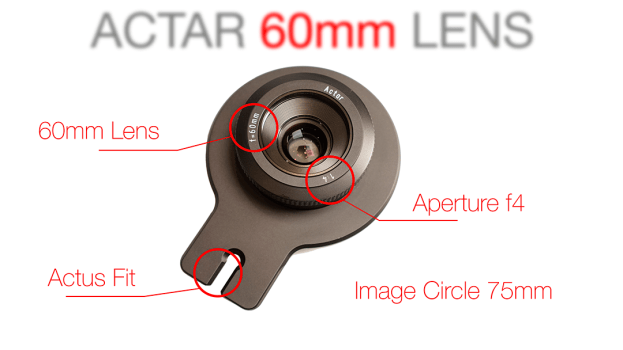
Cambo are expanding the Actus range and have now introduced the new Actar 60mm f4 lens. The lens is supplied fitted in a Cambo Actus plate and can be used with all Actus cameras and Mirrorless camera systems.

actor 60mm lens

Actor 60mm Lens

This lens has an image circle of 75mm, with rear camera shift of 15mm left and right, the total shift without distortion is 30mm. This is an ideal lens should you wish to capture a wide area and retain a good quality stitched image.

Available now, the price of the Actar 60mm lens complete with the Actus Lens Plate is €655.00 excl. TAX/VAT.

Sign up to the blog as more information will follow leading up to Photokina 2016.

Contact your dealer, or find your nearest supplier via the Cambo website; cambo.com email; sales@cambo.com

Posted in ACTUS, Photokina | Tagged , , , , , | Leave a comment

The Cambo Actus: A Gem!

Michael Erlewine writes

On his reactions to the Cambo Mini View Camera.

The Cambo Actus: A Gem!

I have a whole shelf or two of focus rails and another one with bellows and/or technical cameras. Some of them are tiny like the old Spiratone camera, which has all the view-camera moves and is of the size to fit a mirrorless camera. Sitting right next to it is a Rollei X-Actus 2 and it weighs over 14 lbs. Then there are the tilt/shift lenses, of which I have three and ever a tilt adapter that only has one fixed angle. And of course, my old standby, the Nikon PB-4 Bellows System.

So, when I finally had time to check out the new Cambo Actus for the Nikon mount, I was in for a surprise, and a pleasant one at that. This little gem, while not perfect, is one of those pieces of equipment that fits so well in hands that I knew right off that I will love using it, and I already do.

Michael Erlewine

©Michael Erlewine

It was a little hard to find one that you didn’t have to wait weeks for and the various adapters were another problem. Luckily, I remembered a company I had purchased a Medium Format camera from years ago, and they know all this stuff: Capture Integration out of Atlanta, Ga. They put together a system that had everything from soup to nuts, all assembled and ready to go. I went with that over waiting for who-knows-how-long, and hunting down all the parts for myself.

This little beauty’s body measures 5.9 x 3.9 x 6.7″ (15 x 10 x 17 cm) and weighs 2.2 lb (1 kg), not ultra-lite, but have you picked up a technical camera lately that is any lighter? And no, it does not have all the movements, but it has the ones I use most and has camera bayonets for Nikon F, Canon EOS, Canon M, Leica M, Sony E-mount, MFT mount, and Fuji X.

Of course I did not find a bayonet for the Pentax K cameras, and within a couple of days of emailing the manufacturer in Netherlands, they agreed to design the first one for my new Actus camera, which I will have pretty soon. As of now, I have the Nikon and the Sony-E-mount camera adapters on hand.

Michael Erlewine

©Michael Erlewine

It is important to understand that the front-standard on the Actus is fixed, while the rear moves, which is just what I want, and what any focus-stacker requires. The front-standard has 360º swing, and front tilt of +10º, -9º, each with their own geared knob. The swing and tilt movements on the front standard rotate around the optical axis, which is handy.

The rear-standard has Rise/Fall of +0.5”, -0.6” (+12mm, -15mm) with its both geared knob and locking knob, and a rear shift of +/-0.8” (20mm) with a locking knob.

As for mounting lenses, the Actus has a sturdy fork adapter that locks in place smoothly (and firmly) in one movement. Voila! Lens adapters come in a variety of formats, including M39, 24mm WA, Leica R, Nikon F, Canon EOS, Hasselblad, Mamiya RZ/RB, Mamiya 645Pro TL, Pentax 645, and with the standard Copal #0 and #1 holes.

The bellows is a dream come true. I am used to wrestling with my other bellows, mounting and unmounting them. With the Cambo Actus, it is all magnetic. The bellows snaps into place, front and rear, in a second and must have some of those rare-earth magnets or something. They fit tight!

As it turns out, the standard bellows turns out to be perfect for me, since with the Nikon D810 (for close-up work) I am not looking at shooting at infinity. The standard rail that comes with the Actus expands from 6” to 8.5”, which is more than enough for the lenses I work with. However, there are Wide Angle Bellows (one fold), Long Bellows (30 cm), and Macro Bellows (45 cm) available as well as special rails to match them.

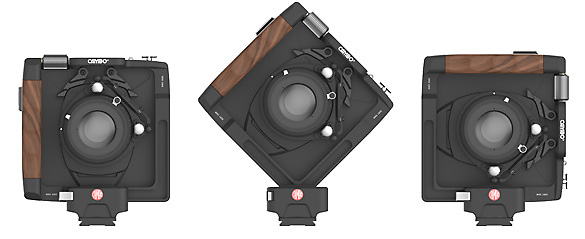
A brilliant and easy-to-use feature on the rear-standard is a lever that allows you to rotate your camera from horizontal to vertical and back in one movement. How nice is that! The Actus also takes my Nikon D810, but if I want to add on a wired remote (Nikon MC-30), which I am used to, I need to add a tiny extension or force the cord a little. I am already used to the extension with my Nikon PB-4 bellows, so I do that.

And this little beastie feels like the precision machine it is. The whole thing fits in a Pelican Storm case iM2050, and comes packed in a foam piece that fits right into the iM2050 perfectly.

Michael Erlewine

©Michael Erlewine

As for what I don’t like about the system or “wishes not granted,” I don’t like the fact that to change camera bayonet mounts on the rear standard requires 4 screws, and about a minute of my time, and worst of all fiddling with those tiny screws. I wish they had offered mountable adapter plates for each camera, so we could just switch them out with no hassle. Although I don’t need it, I would prefer that BOTH front and rear standards move, but that is not a real problem.

I love that the rail is Arca-Swiss compatible, which is all that I use. And again, I LOVE the heft and smooth feel of fine machinery on something I will use just all the time. I use it on the Swiss-Arca Cube C1 (with knob) and can flip it using the C1 so that it is exactly 90º, and still it is sturdy.

As what I do with it, I use it with any number of exotic industrial lenses, like the El Nikkor 105mm APO, the Printing Nikkors, and many others. Since I am not going for infinity focus with this system (but you can with a mirrorless camera), I can do all kinds of close-up and macro stuff with an elegance of movement unknown to me until now. Do I recommend it? I believe you know my answer to that. I love it.

Michael Erlewine is an award-wining archivist of popular culture and founder of AMG, the All-Music Guide, the All-Movie Guide, and ClassicPosters.com (rock concert posters), and many other sites.

Erlewine is also a world-famous astrologer, the first person to ever program astrology on home computers and make programs available to professional astrologers. The author of scores of books on astrology and related topics, including hundreds of articles.

As a specialist in Macro photography, Michael has produced many video tutorials and books on the subject. Many thanks to Michael for letting us publish his story and images on the CamboUK site.

Sign up to the blog as we have more information coming during Photokina 2016.

Contact your dealer, or find your nearest supplier via the Cambo website; cambo.com email; sales@cambo.com
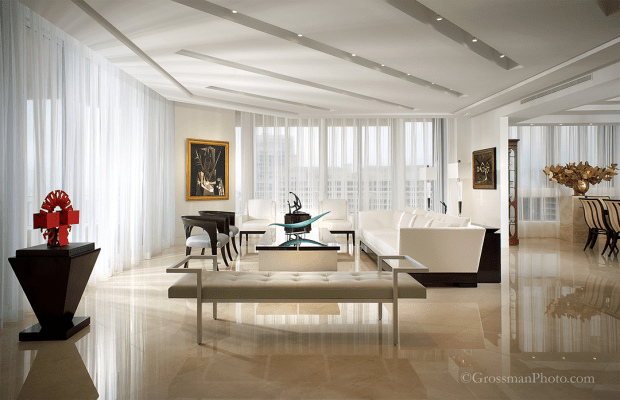
Posted in ACTUS, macro | Tagged , , , , , | Leave a comment

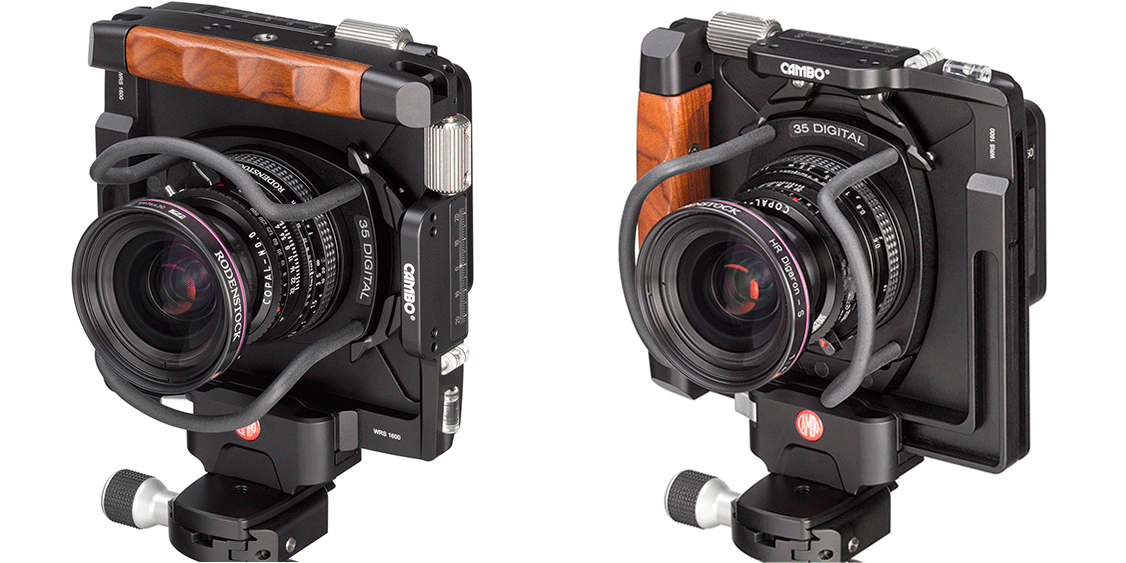
New Cambo Wide RS-1600 Camera

New Cambo Wide RS-1600 Camera

Cambo is pleased to announce the new WRS-1600 camera body, a newly designed system and part of the popular Wide RS series.

WRS-1600 (1)

The cameras unique feature is the ability to rotate from horizontal to vertical thus changing the orientation of the digital sensor with a simple flip of the camera body, switching over is quick and easy to do.

WRS-1600 rotation

The body always remains secure in the mount, there is no shift in weight or re-levelling required. The digital sensor remains central and there is no need to refocus as the camera, lens and digital back is rotated. This saves time and effort when shooting on-location or when using the camera on the RPS copy stand.

wrs-1600GIF

Architectural and landscape photographers shooting in the field will benefit as the digital back remains in place protecting the sensor from exposure to the elements. The camera base fits direct to the CBH-6 ball head, so there is no need to use fiddly quick release plates, the camera stays firmly fixed in position.

Of course the body has lateral displacement built-in, using Cambo’s unique accelerated gears with detents spaced every 5mm. This allows for quick and secure placement of the sensor when making perspective controls and especially when stitching images.

The new WRS-1600 is 100% compatible with the full range of WRS accessories such as lenspanels with Rodenstock HR optics, also including Cambo’s unique tilt/swing lens options for selective sharpness and the optional Rodenstock’s electronic shutter system. 

The price of the WRS-1600 camera is €2,750.00 / $3,425.00 excluding TAX/VAT.

Sign up to the blog as more information will follow leading up to Photokina 2016.

Contact your dealer, or find your nearest supplier via the Cambo website; cambo.com email; sales@cambo.com
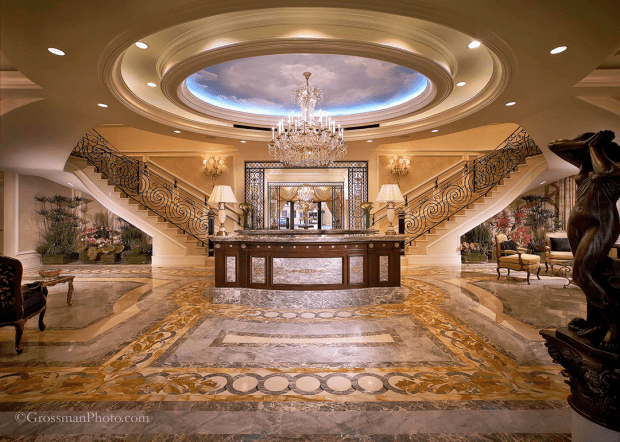
Posted in Photokina, Wide RS | Tagged , , , , , | Leave a comment